
Decoding Success: A Deep Dive into Thriving in the Chiropractic Business
Welcome to our latest discussion on the ins and outs of the chiropractic business world. Today, we’re bringing you the key insights from a riveting conversation between Dr. Brian Paris, a prominent figure at Genesis Chiropractic Software, and Jeff Van Kampen, the go-to expert at Clinic Growth Accelerator. They’ve generously shared their wisdom on what it takes to prosper in today’s ever-evolving chiropractic industry. Understanding Your Position Starting a chiropractic business isn’t all sunshine and roses – it requires a deep understanding of your market positioning. As Jeff articulates, a chiropractor beginning their journey shouldn’t compare themselves to established brands like Ritz Carlton or Nike. These big names have had years to build their brand, starting from scratch just like any other business. Your practice might be offering the highest quality services in town, but remember – building a brand takes time, capital, and strategy. As Jeff puts it, if you’re just starting out, look at how these successful brands operated when they began, not at their current standing. The Power of Direct Response Advertising When you’re starting, Jeff suggests investing in direct response advertising. This form of advertising targets individuals who are ready to take action, providing an immediate return on investment. But it’s not just about immediate returns; you’re also building a list. Suppose you spend a substantial sum on chiropractic Facebook ads. Not only are you attracting potential patients, but you’re also creating a valuable list of local individuals interested in chiropractic services. This list becomes a long-term asset that can be leveraged for email marketing, text marketing, and outbound cold calls, helping you craft effective and targeted marketing campaigns. Streamline Your Processes According to Dr. Brian, the biggest gap in many chiropractic businesses is inconsistency in their processes. Having a structured, systematic approach to every step – from patient check-ins to reexaminations and teaching rehab exercises – is critical to your business’s success. Having a clear process helps you identify bottlenecks in your operations. If everything is left to chance, identifying these hindrances becomes virtually impossible. For instance, if a staff member tasked with office tours isn’t performing optimally, a systematic approach would help you quickly identify and address the issue. Identify Your Main Bottleneck Speaking of bottlenecks, Jeff argues that at any given time, your business will have one primary bottleneck. This bottleneck might be in sales, marketing, or your team – but there’s always just one main obstacle preventing further growth. Identifying and resolving this bottleneck is crucial for your business’s evolution. Building Relationships Finally, the conversation underscores the importance of building relationships, both with clients and within the industry. Whether it’s maintaining a casual rapport with clients or establishing strategic partnerships like the one between Genesis and Clinic Growth Accelerator, nurturing relationships is a cornerstone of success in the chiropractic industry. The insights shared by Dr. Brian Paris and Jeff Van Kampen shine a spotlight on the core aspects of successfully running a chiropractic business. As the journey from seven to eight figures unfolds, we can look forward to more wisdom, more lessons, and more growth. Stay tuned!
Embracing the Power of Connection in Chiropractic Practice: Insights from Joey Coleman
In a rapidly evolving healthcare landscape, chiropractors must continually adapt to meet the ever-changing needs of their patients. From incorporating new techniques to developing robust patient relationship management strategies, the objective remains consistent: optimize patient outcomes and enhance patient satisfaction. In a recent discussion with Dr. Brian Paris from Genesis Chiropractic Software, Joey Coleman, renowned customer experience expert and author of “Never Lose a Customer Again,” shared invaluable insights on how chiropractors can foster stronger relationships with their patients and employees. Harness the Power of Genuine Connection Today, many practitioners realize that their success extends beyond their technical prowess as healers. It’s also about building meaningful relationships. Coleman emphasizes the importance of curiosity, active listening, and attentiveness in fostering these connections. By demonstrating genuine interest in patients’ lives, chiropractors can create a more personalized and satisfying healthcare experience. He recommends asking non-invasive questions about their hobbies, passions, and lifestyle, leading to a more human and empathetic connection. Moreover, while notes and medical records are essential for tracking patient health progress, Coleman suggests that keeping notes about their personal lives can be equally beneficial. These notes can include their birthdays, favorite sports, or even their children’s names. This approach adds a personal touch, showing patients that you see them as individuals, not just patients. Valuing Employees Equally Similarly, chiropractors mustn’t overlook the value of nurturing relationships with their employees. Coleman contends that chiropractors often know less about their employees than their patients, a situation he finds baffling given employees’ integral role in practice success. He encourages chiropractors to show the same level of interest and curiosity in their employees’ lives, helping to create a more connected, valued, and motivated team. The Art of Gifting Coleman also discussed the power of personalized gifting. Instead of conventional, often forgettable gifts, he suggests giving something that connects with patients on a personal level. Such a gesture displays a level of thoughtfulness and consideration that generic gifts often fail to convey, helping to deepen the patient-doctor relationship. The Importance of Saying Thank You While it may seem simple, a heartfelt expression of gratitude can significantly impact someone. Coleman champions the idea of expressing gratitude to patients, employees, and other stakeholders for their roles in your practice. This act can take various forms, from a handwritten note to a personalized video message, emphasizing the individual’s value in your life and your practice. Whether you’re a data-driven practitioner or someone who leans more towards the emotional, relational aspects of care, Coleman’s approach is universally applicable. With its emphasis on genuine connection, personalization, and gratitude, his approach to patient and employee relations is supported by both hard science and softer emotional dynamics. By putting these practices into action, chiropractors can elevate their patient experiences, improve team morale, and ultimately, drive the success of their practice.
Has the Provider’s Compensation Kept Up With the Economy or Healthcare Costs?
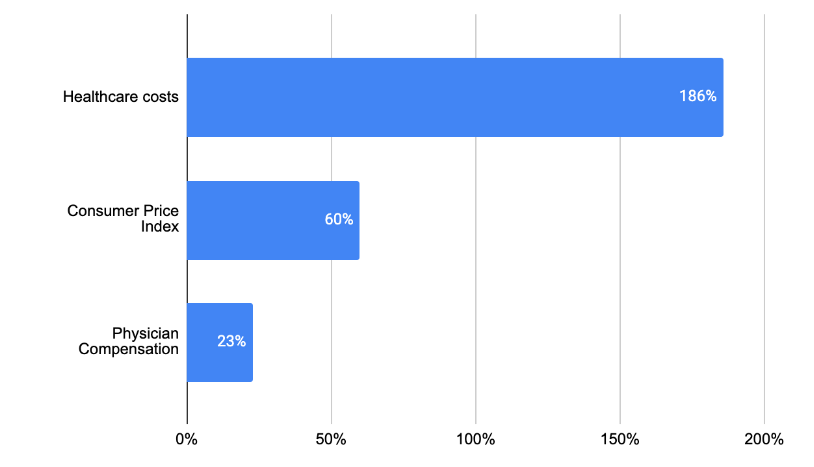
The U.S. faces escalating healthcare spending, with 2021 per capita costs reaching $12,318. Compared to advanced economies, the U.S. spent double the amount on healthcare. Factors contributing to this include an aging population, expensive medical innovations, and defensive medicine practices. Chronic diseases among older adults are a significant cost driver. Rising healthcare expenditures and declining physician income create a paradox in the industry. The excessive cost of medical innovation, demographic shifts, and defensive medical practices challenge healthcare affordability and sustainability.
The Future of Chiropractic: Overcoming Challenges and Embracing Opportunities
In the ever-evolving landscape of healthcare, the chiropractic profession finds itself at an intersection of significant opportunities and formidable challenges. Our recent interview between Dr. Brian Paris from Genesis Chiropractic Software and Bharon Hoag, a prominent advocate for chiropractic illuminates the profession’s enormous potential and its concurrent hurdles. Legal Challenges: A Global Concern The chiropractic profession’s legal battles are not confined to the United States but are truly a global concern. The battles fought internationally are critical to the defense and evolution of chiropractic. Proactively confronting these issues at their onset in other countries serves as a preventative measure to protect the profession in the U.S., effectively circumventing the development of more intricate and expensive legal predicaments. Hoag underscored that out of approximately 700 legal battles they engaged with, around 660 occurred outside of the United States. This strategic approach to legal challenges ensures that potential threats to the profession are intercepted and addressed before they reach the home turf, where their impact could be more detrimental. The Power of Collaboration in Chiropractic Arguably one of the most essential insights from Hoag’s conversation with Dr. Paris is the emphasis on collaboration over competition. The future of the chiropractic profession will not be defined by infighting or territorial disputes among different organizations within the profession but by their capacity to work cohesively for the common goal: advancing chiropractic practice. Hoag highlighted the importance of understanding that each organization has a distinct role to play in the larger chiropractic ecosystem. By acknowledging and respecting these differences, organizations can coexist and collaborate effectively, thus bolstering the collective strength of the profession. Embracing Growth: Increasing Support and Resources To confront the emerging challenges effectively and capitalize on the burgeoning opportunities, the chiropractic profession needs to embrace growth—not merely in numbers, but in terms of resources and support. Hoag stressed that the focus shouldn’t be on soliciting large contributions that require significant fundraising efforts. Instead, the goal is to garner support from a broad base of contributors who can collectively provide the resources needed to meet the profession’s growing needs. Hoag aims to rally 10,000 contributors to meet the profession’s needs. With more resources, the profession will be better equipped to respond to growing demands, defend itself in legal battles, and continue to make strides in the wider healthcare landscape. Nurturing the Future of Chiropractic An enduring commitment to the profession’s future is clearly evident in Hoag’s narrative. Preparing the next generation of chiropractic professionals to take up the mantle is a crucial element of this commitment. Hoag, whose own children are stepping into the profession, stressed the need for creating a profession that young practitioners can not only be a part of but also take pride in. The upcoming generation of chiropractors is passionate, skilled, and poised to make a significant difference in healthcare. It is incumbent upon the current leaders of the profession to foster an environment that nurtures these aspirants’ potential and passion. Chiropractic’s Role in Integrated Healthcare At its core, the chiropractic profession has the potential to instigate a transformative shift in our healthcare system. By advocating for the integration of chiropractic into mainstream healthcare, we can instigate a new approach to health and wellness that prizes natural healing methods. Hoag believes that this integration can not only dramatically improve individual health outcomes but can also significantly influence the economic structure and enhance human interactions globally. This potential extends from the micro-level, where practitioners engage personally with patients, to the macro-level, where systemic change can redefine the healthcare landscape. Visit the Chiropractic Defense Council here
